
A flight strike is not automatically an extraordinary circumstance. If the airline's own staff strike — cabin crew or pilots — it normally counts as within the airline's control, so it is not an extraordinary circumstance and you are entitled to compensation under EU 261. If air traffic control (ATC) or airport staff strike, it usually counts as an extraordinary circumstance instead, and no compensation is paid. So it comes down to one single question: who is it that is striking?
This page works through exactly that line. "Strike" is not a category of its own in EU 261 — it is a sub-case of the larger question of extraordinary circumstances, and it is a sub-case where the legal position is actually fairly clear. If you want a broader overview of the whole exception, see our guide to extraordinary circumstances on flights .
What "extraordinary circumstance" means — in short
EU 261 normally gives you the right to EUR 250–600 in compensation when a flight is cancelled or delayed by more than three hours. But not if the disruption was caused by extraordinary circumstances beyond the airline 's control — events the airline could not have avoided even if it had done everything reasonable. Extreme weather and security threats are the textbook examples.
The term is to be interpreted narrowly. It is an exception, not a default rule — and so it is not a stock answer an airline can stick onto anything. For strikes, the narrow reading means the question is not "was there a strike?" but "did the strike lie within the airline's control, or outside it?".
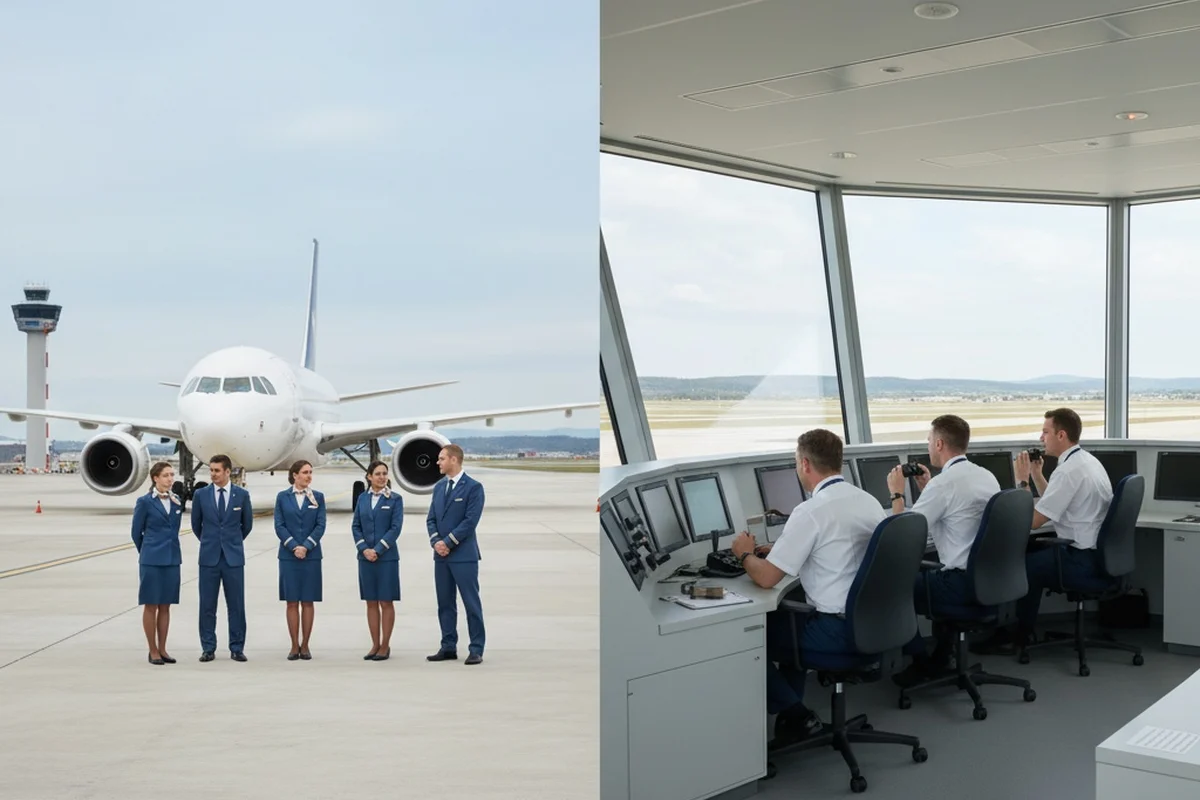
What decides the compensation is who is striking — the airline's own staff or air traffic control.
The decisive line: the airline's own people, or someone else's
| Type of strike | Within the airline's control? | Extraordinary circumstance? | Right to compensation |
|---|---|---|---|
| The airline's own cabin crew | Yes, normally | No | Yes, usually |
| The airline's own pilots | Yes, normally | No | Yes, usually |
| Air traffic control (ATC strike) | No | Yes, usually | No, usually not |
| Airport staff (ground/security) | No | Yes, usually | No, usually not |
| A subcontractor's staff | Assessed case by case | Unclear | Depends on the circumstances |
The thinking behind the table: when the airline's own staff strike, the dispute is about the airline's own employment terms, its own negotiations and its own decisions. That is part of running an airline — a business risk the airline itself controls. When air traffic control or the airport strikes, the airline is hit by something someone else triggered, much like bad weather.
The airline's own staff strike — not an extraordinary circumstance
The clearest legal source here is the CJEU's judgment in Krüsemann and Others (C-195/17). The background: staff at the airline TUIfly stayed home en masse — calling in sick — in protest after the airline announced a restructuring. It was a wildcat strike: spontaneous, not formally called by the union. The airline argued that this was an extraordinary circumstance beyond its control.
The Court said no. A staff dispute rooted in the airline's own decisions — here a restructuring announcement — belongs to the normal running of an airline and lies within its control. So, no extraordinary circumstance. The passengers were entitled to compensation.
What that means for you: if an airline calls a strike by its own cabin crew or pilots an extraordinary circumstance, that runs against this line. The rejection rests on weak ground. The question of announced, union-called strikes — as opposed to wildcat ones — is legally more contested, but the main rule still carries weight: the airline's own labour dispute is the airline's own responsibility.
Air traffic control or the airport strikes — usually extraordinary
If instead it is air traffic control that strikes — an ATC strike — or the airport's own staff, things look different. Now it is not the airline's people striking, and the airline does not control the dispute. Such a strike normally counts as an extraordinary circumstance, and then no compensation is paid.
This is the situation one of the quotes from traveller forums describes: "ATC delays and flow restrictions are considered force majeure and lie outside the airline's control. Only the duty of care applies, no compensation." For an air traffic control strike specifically, that is broadly right.
But "extraordinary" is not a free pass. The airline must still show that it did what it reasonably could to avoid your particular departure being cancelled. A controllers' strike in one single country does not necessarily knock out a flight that could have taken another route. And if a departure is cancelled several days after the strike is over, the causal link is open to question.
"An event beyond our control" — when the stock answer is not enough
It pays to recognise the language airlines use. When they say no, the same phrasings keep coming back — extraordinary circumstances, force majeure and, word for word from a rejection one passenger shared, "the compensation you are claiming does not apply because the delay was caused by an event beyond our control".
The problem is not the words themselves. The problem is that they are used as a catch-all clause — a stock answer that does not distinguish between types of strike. A rejection that only says "strike = beyond our control", without naming which strike it was or who was striking, has not made the assessment the law requires. That gives you grounds to ask the airline to be specific: which strike, whose staff, and why your particular departure could not be saved. If it was the airline's own people who struck, you can dispute the rejection — and, if needed, take the matter onward to ARN (Allmänna reklamationsnämnden — the Swedish National Board for Consumer Disputes), which resolves consumer disputes free of charge.
The duty of care applies even with a valid extraordinary circumstance
One thing does not change just because the strike really was an extraordinary circumstance: the duty of care. Even when the right to the EUR 250–600 falls away, the airline's obligation to look after you remains — meals, drinks and, where needed, a hotel and transport while you wait.
So an ATC strike removes the compensation but not the care. That is often the only right left in an ATC case, and it is worth claiming — keep the receipts if you have to arrange food or accommodation yourself. What to do in practice during an ongoing strike we have gathered on the page what to do during a flight strike .
This is not legal advice
This page is based on published and institutional sources — expert review has not yet been carried out. For advice on your individual case, contact ARN (Allmänna reklamationsnämnden — the Swedish National Board for Consumer Disputes) or Transportstyrelsen (the Swedish Transport Agency), the supervisory authority for air passenger rights in Sweden.
Strike cases are assessed individually, and the question of announced union strikes is still contested. We date and update this page when the CJEU, EUR-Lex or Transportstyrelsen issues something new. Read more in our guide to strikes and compensation .
Frequently asked questions
Is a flight strike always an extraordinary circumstance?
No. A strike is not automatically an extraordinary circumstance. If the airline's own staff strike — cabin crew or pilots — it normally counts as within the airline's control, so it is not an extraordinary circumstance and you are entitled to compensation. If air traffic control or airport staff strike, it usually counts as an extraordinary circumstance instead. What decides it is who is striking.
What did the CJEU say about strikes in the Krüsemann case?
In Krüsemann and Others (C-195/17) the Court of Justice of the EU examined a so-called wildcat strike — staff at the airline TUIfly stayed home in protest after an announcement of restructuring. The Court ruled that a staff dispute rooted in the airline's own decisions belongs to its normal activity and lies within its control. It is therefore not an extraordinary circumstance, and the passengers were entitled to compensation.
Is an air traffic control strike an extraordinary circumstance?
Yes, normally. An air traffic control strike — an ATC strike — hits the airline from the outside; it is not the airline's own staff striking and the airline does not control the dispute. Such a strike usually counts as an extraordinary circumstance, and no compensation is paid. The airline must still show that it did what it reasonably could to avoid your particular departure being cancelled. Read more in compensation for ATC and air traffic control strikes .
The airline blames an event beyond its control — what do I do?
Ask the airline to be specific. A rejection that only says the disruption was "caused by an event beyond our control" without naming which strike or who was striking has not made the assessment the law requires. If it was the airline's own staff who struck, the rejection rests on weak ground — you can dispute it and, if needed, take the matter to ARN, which resolves consumer disputes free of charge.
Am I entitled to meals and a hotel if the strike is an extraordinary circumstance?
Yes. The duty of care applies even when a strike is an extraordinary circumstance and no compensation is paid. The airline must still give you meals, drinks and, where needed, a hotel and transport while you wait. A valid extraordinary circumstance removes the right to the EUR 250–600 — but not the right to be looked after. We work through when the airline does not have to pay in a section of its own.
Sources and further reading
- EUR-Lex — Regulation (EC) No 261/2004
- Court of Justice of the EU — Krüsemann and Others, C-195/17 (a wildcat strike among an airline's own staff is not an extraordinary circumstance)
- Transportstyrelsen — Air passenger rights (the supervisory authority in Sweden)
- ARN — Allmänna reklamationsnämnden — resolves consumer disputes free of charge
If you want to know what a strike case can be worth in money, see flight strike compensation . For strikes that affect air traffic control and airports, see our page on compensation for ATC and security-related delays .


No comments yet