
Extraordinary circumstances is the exception an airline leans on when it says no to compensation. It sits in Article 5(3) of EU 261/2004 and means the airline does not have to pay the fixed amount — EUR 250, EUR 400 or EUR 600 — if the disruption was caused by something that genuinely lay beyond its control and could not have been avoided even with all reasonable measures. The important part, and what this page works through cause by cause: it is a narrow exception. The CJEU interprets it strictly. A technical fault normally does not count. "Event beyond the airline's control" in a standard email is not legal proof — it is a phrasing, and one you can challenge.
This page is the hub for the question of cause. Further down there is a clear verdict — compensation or not — for weather, technical fault, strike, bird strike and ATC, each with a link to a deeper guide. If you already know which cause applies to you, you can skip straight there. If you are not sure your case qualifies at all, start instead with our step-by-step router that decides whether you are entitled to compensation .
Compensation is not a refund
One thing has to be clear before we go further, because it is the most common misunderstanding around this topic. Compensation is a fixed flat amount — EUR 250 to EUR 600 — that you receive for the inconvenience itself of a long delay, a cancelled flight or denied boarding. A refund is something else: the money for the ticket back, when you choose not to travel at all.
This matters precisely on the question of cause. An extraordinary circumstance can remove your right to compensation — but it never removes your right to a refund if the flight was cancelled and you do not want to be rebooked. The two rights are assessed separately. An airline that offers you a refund and lets it sound as if the matter is therefore settled is mixing up two separate things.
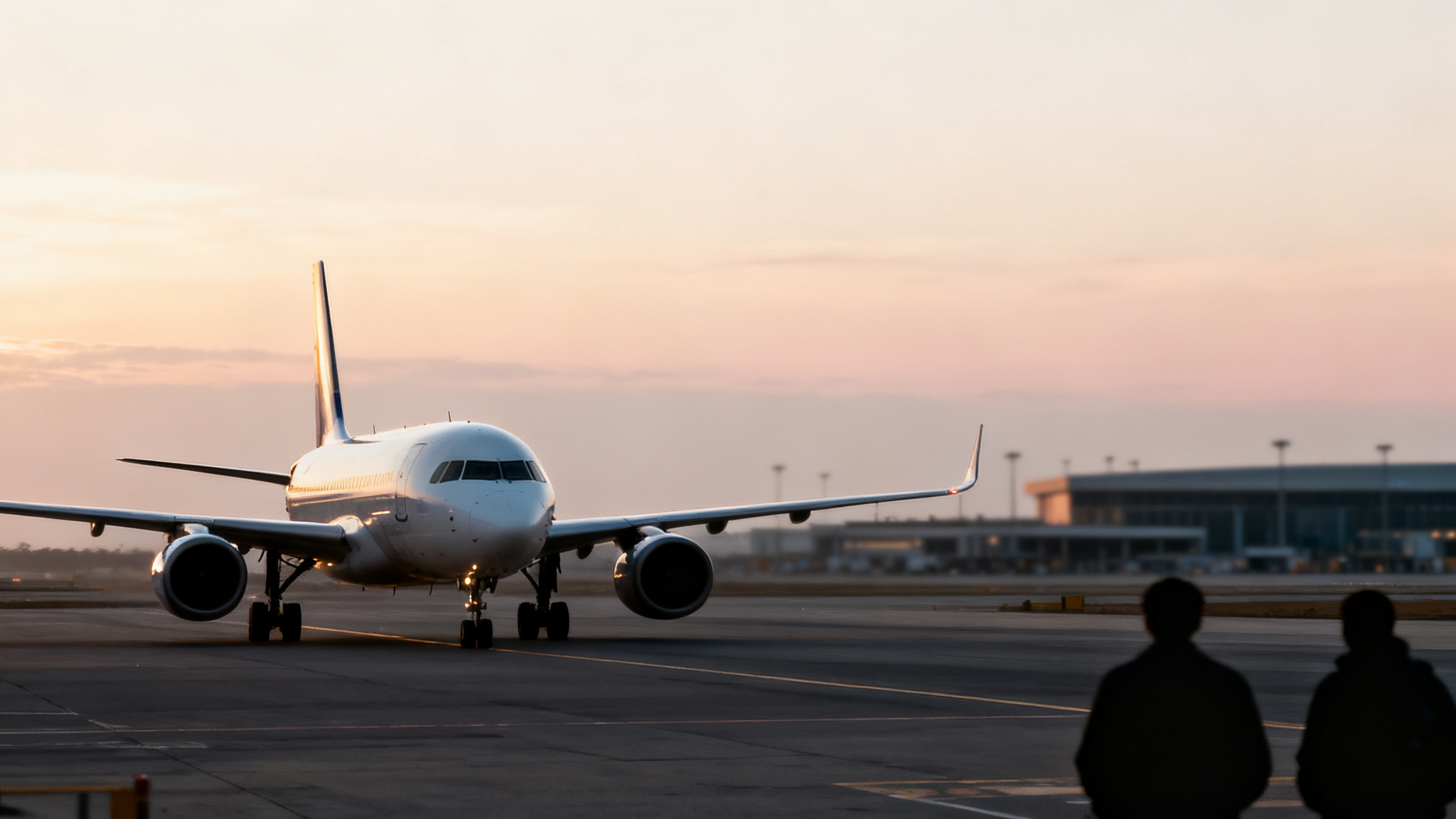
A technical fault normally does not count as an extraordinary circumstance.

What "extraordinary circumstance" actually means
The term comes from Article 5(3) of EU 261/2004. The legal text itself never defines it exhaustively, and that has turned it into a catch-all clause — airlines have stretched it a long way. But the CJEU has narrowed the reading in a long series of cases, and two conditions must be met at the same time for the defence to hold:
- The event must lie outside the airline's normal activity and outside its actual control. Something the airline controls, or that belongs to ordinary operations, does not qualify.
- The delay must not have been avoidable even if the airline had taken all reasonable measures. That an event occurred is not enough — the airline must also show it could not work around it.
And a decisive detail airlines rarely mention: the burden of proof is on them. It is the airline that must show both conditions are met. A standard email with the phrase "event beyond our control" is not proof. Ask for a concrete explanation of what happened, and if none comes, or it is vague — take the case further. More on that below.
What the question of cause is worth in money
The question of cause decides one thing concretely: whether you get the fixed compensation amount or not. The amounts are set by the flight distance, not by how long the delay was — as long as the delay on arrival is over three hours. It is these two numbers, the three-hour threshold and the amount tiers, that most passengers focus on, and they are worth having clear before you read the cause table.
| Flight distance | Compensation | Roughly in SEK |
|---|---|---|
| Up to 1,500 km | EUR 250 | ≈ SEK 2,800 |
| Within the EU over 1,500 km, or other flight 1,500–3,500 km | EUR 400 | ≈ SEK 4,500 |
| Other flights over 3,500 km | EUR 600 | ≈ SEK 6,800 |
EUR is the legal unit in EU 261/2004; the SEK amounts are approximate and move with the exchange rate. If the airline's defence of an extraordinary circumstance holds, this whole amount falls away — but not the refund, and not the duty of care. That is why the question of cause is worth taking seriously rather than settling for a first no. A deeper guide to amounts and the three-hour threshold is on the page about flight delay compensation .
A clear verdict per cause
The table below gives the main rule for each of the common causes. "Depends" in the last column is not a dodge — it is the point: nearly every cause has a but, and it is in that space that most claims are decided.
| Cause | Compensation as a main rule? | The important exception |
|---|---|---|
| Technical fault on the aircraft | Yes — you are normally entitled to compensation | Narrow exception: a hidden manufacturing defect or sabotage may be extraordinary |
| Weather (storm, snow, fog) | Usually no — weather is normally extraordinary | But: a delay that is really the airline's own de-icing or planning failure does not count as "weather" |
| Strike | Depends who is striking | The airline's own staff: usually yes. ATC or airport staff: usually no |
| Bird strike | No for the collision itself — it is extraordinary | But: a long knock-on delay caused by the airline's slow inspection may be claimable |
| ATC / air traffic control / security | Usually no — lies outside the airline's control | But: the airline must still show it could not have limited the delay |
Technical fault — you are usually entitled to compensation
This is the cause airlines most often invoke wrongly. The common belief — "the plane was broken, so it is beyond the airline's control" — is not legally correct. In Wallentin-Hermann (C-549/07) the CJEU ruled that technical problems found during maintenance, or caused by poor maintenance, belong to an airline's normal activity. Keeping a fleet airworthy is the very core of running an airline. A routine engine fault, a broken component, a hydraulic leak — that sort of thing is generally not extraordinary, and you are then entitled to compensation.
The narrow exception does exist: a hidden manufacturing defect that even the manufacturer missed, or sabotage. But it is exactly that — narrow, and the burden of proof for landing there is on the airline. Read the full guide on compensation for a technical fault .
Weather — usually extraordinary, but not always
Severe weather — storm, heavy snowfall, dense fog, thunderstorms — normally counts as an extraordinary circumstance. An airline does not control the weather, and the main rule on compensation then often falls away. The widespread idea that "a flight cancelled because of wind and weather never gives compensation" is still too blunt.
The question is whether the delay really was caused by the weather, or whether weather is just the label on a failure that was the airline's own. Did other airlines have departures in the same weather? Was the hold-up because the airline lacked de-icing capacity, or because a crew had already run out of duty time for other reasons? Then it is no longer a pure weather case. The full guide is on compensation for a weather flight delay .
Strike — the answer depends who is striking
Strike is the cause where the answer varies most, and where the confusion is greatest. The rule of thumb: a strike among the airline's own staff — pilots, cabin crew — usually does not count as extraordinary, because working conditions belong to the airline's activity, so compensation can be paid. A strike by air traffic control (ATC), airport staff or other outside parties, on the other hand, normally lies beyond the airline's control, and then no compensation is usually paid.
It is a counter-intuitive rule that is easy to get backwards, and airlines like to use the word "strike" as though the answer were always no. The full picture is on our page about strikes and extraordinary circumstances .
Bird strike — extraordinary, but the knock-on delay may be claimable
A bird strike counts as an extraordinary circumstance. The CJEU settled the question explicitly in Pešková (C-315/15): a bird strike lies outside an airline's normal activity and actual control. The collision itself therefore normally gives no compensation.
But the judgment says more than that. The airline must still show it took reasonable measures to limit the delay afterwards. If the inspection and paperwork drag on for reasons that were the airline's own, that part of the delay may be claimable even if the collision itself is not. We work through this two-part assessment on compensation for a bird strike flight delay .
ATC, air traffic control and security reasons
Delays caused by air traffic control — airspace congestion, capacity restrictions, ATC restrictions — normally lie outside the airline's control and usually give no compensation. The same applies to security threats and similar outside events. But here too the requirement remains that the airline did what it could to limit the effect. The full guide is on compensation for ATC and security-related delays .
Edge cases: when the cause is not clean
The real difficulty rarely lies in a single cause — it lies in cases where several things happened at once, or where an extraordinary event had consequences that were the airline's own responsibility. These are precisely the cases no official page tackles properly, and where airlines find it easiest to say no on loose grounds. Three patterns are worth recognising:
- The stacked cause. A storm gave the aircraft an hour's delay. That hour was enough for the crew to later hit their duty-time limits, which added several more hours of hold-up. The weather was extraordinary — but crew planning is the airline's responsibility, and the whole delay is then not automatically exempt.
- The knock-on effect from an earlier flight. Your aircraft was delayed because that same plane ran late on an earlier leg. The CJEU has been clear: that an earlier extraordinary event hit another flight does not automatically make your delay extraordinary. The airline must show it could not have rescheduled to protect your particular departure.
- The slow recovery. An extraordinary event happened — but the delay became far longer than it needed to be, because the airline lacked a backup plan, staff or a replacement aircraft. That extra time is about the airline's organisation, not the original event.
What all three have in common: it is not enough for the airline to point to an extraordinary event somewhere in the chain. The airline must show it took all reasonable measures to limit the delay — and if it could have done more, the defence does not hold all the way. If you recognise your own case here, a no is far from the final word.
The duty of care never falls away
This is the point that offsets all the negatives above, and it is almost always forgotten. Even when an extraordinary circumstance frees the airline from paying cash compensation, the duty of care remains.
The duty of care means the airline must look after you while you wait: meals and drinks in reasonable quantity, the means to make a call, and for a delay overnight also a hotel and transport to and from it. That right is tied to the disruption itself, not to the cause. A storm can remove your EUR 400 — but it does not remove the airline's obligation to make sure you have food and a roof over your head. If you are stranded and the airline points to "force majeure" to escape all responsibility, that is not correct: the duty of care applies anyway. More on that on the page about the right to care, meals and a hotel during a flight delay . Read more in our guide to compensation for a weather flight delay .
When the airline invokes the exception — what to do
If you get a no citing extraordinary circumstances, treat it as a starting point, not a final verdict. Three concrete steps:
- Ask for a specific explanation. What was the actual cause? "Event beyond our control" will not do — ask what concretely happened and why it could not be avoided. The airline has the burden of proof.
- Test the cause against the main rule above. If it is a technical fault, the starting point is that you are entitled to compensation. If it is weather, ask whether it really was the weather or the airline's own handling.
- Escalate if the answer does not hold. If the airline stands firm, you can turn free of charge to ARN (Allmänna reklamationsnämnden — the Swedish National Board for Consumer Disputes), and Transportstyrelsen (the Swedish Transport Agency) is the supervisory authority for air passenger rights in Sweden. How to proceed step by step is on claim flight compensation yourself .
If you want to see what your case is worth first, use our flight compensation calculator . An overview of the whole framework is in our guide to EU 261 air passenger rights .
When the airline invokes the exception, the wording in the email is not proof.

This is not legal advice
This page is based on published and institutional sources — expert review has not yet been carried out. For advice on your individual case, contact ARN (Allmänna reklamationsnämnden — the Swedish National Board for Consumer Disputes) or Transportstyrelsen (the Swedish Transport Agency), the supervisory authority for air passenger rights in Sweden. The general information here does not replace an individual assessment.
CJEU case law on extraordinary circumstances develops continuously, and the 2026 reform of the air passenger regulation may adjust how the exception is worded. We date and update this page when EUR-Lex, Transportstyrelsen or the CJEU issues something new.
Frequently asked questions
What do extraordinary circumstances mean?
Extraordinary circumstances is an exception in Article 5(3) of EU 261/2004. It frees the airline from paying compensation if the disruption was caused by an event that lies outside its normal activity and that could not have been avoided even with all reasonable measures. The CJEU interprets the exception narrowly — it is not a blank cheque.
Is a technical fault an extraordinary circumstance?
Normally not. In Wallentin-Hermann (C-549/07) the CJEU ruled that technical problems found during maintenance, or caused by poor maintenance, belong to an airline's ordinary activity. They therefore generally do not count as extraordinary, and you are entitled to compensation. The exception covers a narrow set of cases, for example a hidden manufacturing defect. Read more in compensation for a technical fault .
Must the airline help me even if the disruption was extraordinary?
Yes. The duty of care applies regardless of cause. Even when an extraordinary circumstance frees the airline from paying cash compensation, it must still offer meals, drinks and, where needed, a hotel and transport. That right never falls away, however strong the force majeure defence is.
Who has to prove a circumstance was extraordinary?
The burden of proof is on the airline. It is the airline that must show both that the event was extraordinary and that it took all reasonable measures to avoid the delay. The claim "event beyond our control" in a standard email is not proof — ask for a concrete explanation and take the case further if none comes.
Sources and further reading
- EUR-Lex — Regulation (EC) No 261/2004 , in particular Article 5(3)
- Court of Justice of the EU — Wallentin-Hermann, case C-549/07 (technical faults normally belong to the airline's activity); Pešková, case C-315/15 (a bird strike is extraordinary)
- Transportstyrelsen — Air passenger rights (the supervisory authority in Sweden)
- Konsumentverket — Delayed or cancelled flights (the Swedish Consumer Agency)
- ARN — Allmänna reklamationsnämnden — resolves disputes free of charge for the consumer
Last reviewed: 17 May 2026.


No comments yet