
"EU 261 new rules 2026" refers to Regulation (EU) 2026/261 — the revised air passenger rights regulation that replaces today's EU 261/2004. The reform does not touch the amounts: €250, €400 and €600 (roughly SEK 2,800, 4,500 and 6,800) stay. What it does is rewrite several core terms, clarify where the delay thresholds sit and tighten the requirements on how an airline must handle a compensation claim. The rules take effect after a transition period. This page goes through what changes, what stays — and, just as important, what is still uncertain. Kravflyg visar steg för steg vad du ska göra.
We will say it plainly right here: parts of the reform are not finalised in the sense that every figure is nailed down in a consolidated EUR-Lex text. Where the reporting diverges, we say so, cite the conflicting sources and stop short of presenting a contested figure as decided. That is the whole point of an honest breakdown of a rule still in motion.
One thing first: this is the air rules, not the rail rules
The EU is revising passenger rights across several areas at once, and that creates mix-ups. This page is about the air-travel reform — Regulation 2026/261. It is not about the EU 's rules for rail passenger rights. If you search for "new passenger rights directive" or "new passenger rules 2026" you can land in the rail rules, which have entirely different amounts and conditions. If it is your delayed flight you are wondering about, you are in the right place.
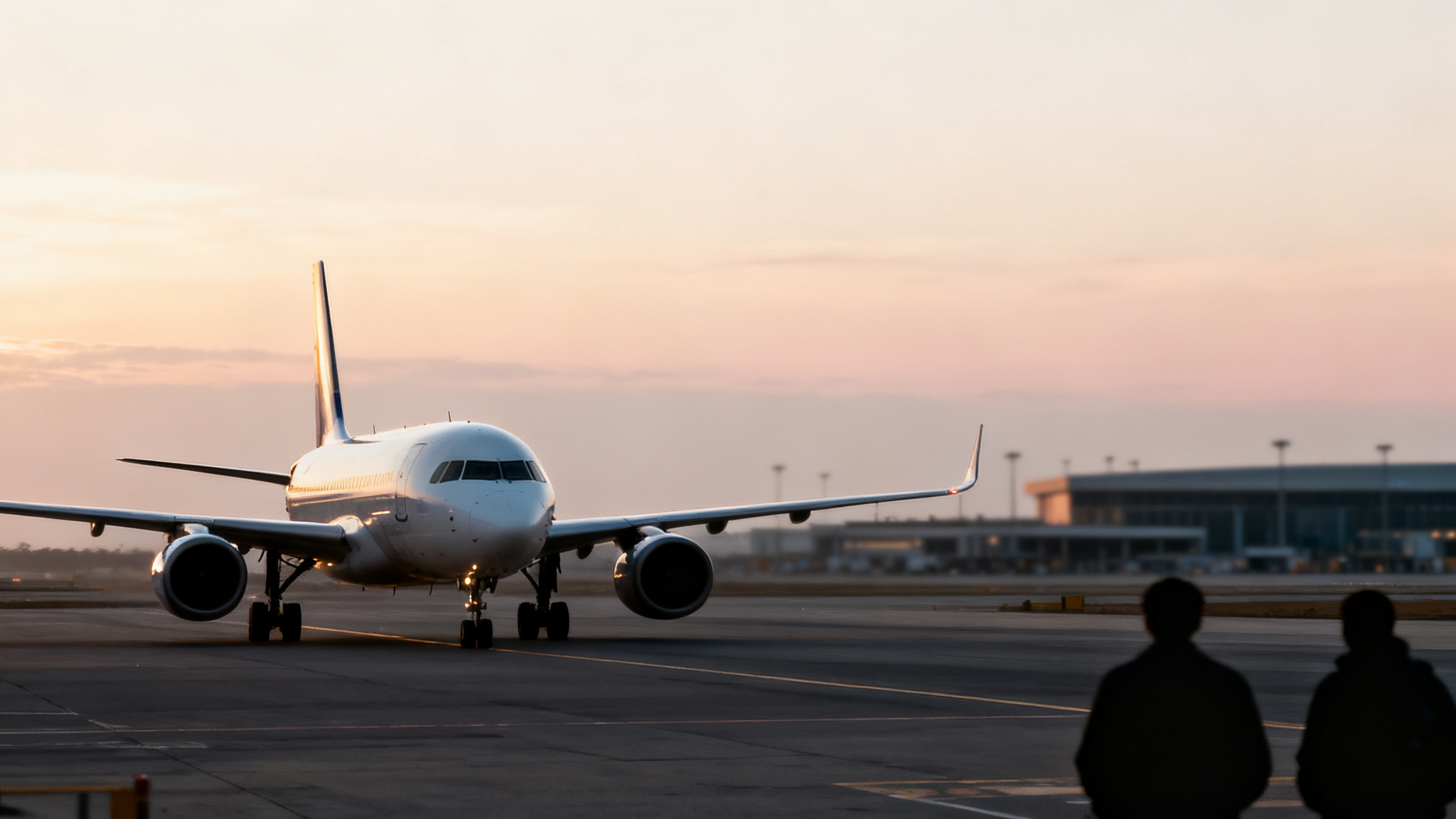
EU 261/ 2004 applies today ; Regulation 2026/261 is the successor that takes effect after a transition period.

EU 261/2004 and 2026/261: predecessor and successor
There are two sets of rules to keep apart:
- EU 261/2004 — Regulation (EC) No 261/2004 — is the regulation that applies today. The whole breakdown of passenger rights in EU 261 is built on that text.
- Regulation (EU) 2026/261 is the successor. It is published in EUR-Lex, but its substantive rules take effect only after a transition period.
The decisive point for you as a passenger: which set of rules governs a claim is decided by the date of the flight disruption, not by when you file the claim. If your flight is delayed today, it is judged against 261/2004 even if you submit the claim much later. The reform does not change history — it applies going forward.
Why is the regulation being revised?
EU 261/2004 has applied for over two decades, and in that time a large part of what actually decides cases has grown up outside the text of the law itself. The 3-hour rule, how connecting flights are assessed, what counts as an extraordinary circumstance — these have largely been shaped by the Court of Justice of the EU, case by case. The result is a regulation that works but is hard to read: to know what applies you have to know both the regulation and a string of court rulings.
That creates two problems. Airlines can stretch the parts that rest only on case law, because a ruling can always be argued away as different from the case at hand. And passengers struggle to know their rights without digging into the law. The Regulation 2026/261 reform is an attempt to fix both: to pull what is scattered today into a clearer, more complete regulatory text. That is why the reform strengthens the passenger's position in substance even where it does not change a single figure — a rule in the text of the law is simply harder to get around than a reference to a court ruling.
What changes: an overview
The reform touches three areas. The table below gives the whole picture; then we go through each row.
| Area | EU 261/2004 (applies now) | Regulation 2026/261 (after transition) |
|---|---|---|
| Compensation amounts | €250 / €400 / €600 | Unchanged in the texts published so far |
| Delay threshold | 3 hours — established through EU case law, not the text of the law | The threshold is written into the regulatory text; the exact level for short flights is debated |
| Connecting flights | A single journey is assessed as a whole — via case law | The principle is written into the text |
| Extraordinary circumstances | A vague term, no exhaustive definition in the law | Clarified; cost reasons such as higher fuel prices are not to count as force majeure |
| Claim process | Few explicit response deadlines on the airline | Tightened requirements on handling and response times |
| Duty of care | Meals, drinks, a hotel for a longer disruption | Stays; clarified |
As you can see, not one row is a reduction of your rights. The reform's stated purpose is to move principles that today exist only in court case law into the text of the law itself — which makes them harder for an airline to contest.
The delay thresholds: the contested part
This is the most disputed point in the reform. Under 261/2004 the 3-hour rule rests on the Court of Justice's ruling in the joined Sturgeon cases (C-402/07 and C-432/07) — not on an explicit article. That has been a weakness: a rule built on case law is easier to question than a rule written in black and white in the regulation.
The reform wants to write the threshold straight into the text of the law. That is an improvement in substance. But where the threshold lands is uncertain right now, and we are not going to pretend otherwise. The Council of the EU position from June 2025 wanted to raise the threshold for shorter flights — four hours instead of three was discussed. Later Swedish reporting points the other way: Transportföretagen (the Confederation of Swedish Transport Enterprises) wrote in January 2026 that compensation "continues to be paid already after a three-hour delay regardless of the length of the flight". Until the final consolidated text in EUR-Lex is unambiguous, we treat the figure itself as not established.
We have gathered what we know about this on a dedicated page — see the new delay thresholds in the 2026 rules, which is updated as soon as the picture becomes clear.
The definitions: what counts
The reform tightens several core terms that decide when the compensation is triggered.
Connecting flights. Under 261/2004 it has been a point of dispute how a missed connection is assessed — each leg on its own, or the journey as a whole. The Court of Justice has, in several cases including Wegener (C-537/17), established that a single booking is seen as one journey and that it is the delay at the final destination that counts. The reform writes that principle into the text.
Extraordinary circumstances. The term has been in 261/2004 but never exhaustively defined, which has made it an elastic clause. The reform work touches exactly this. A concrete signal from SVT's reporting in May 2026: higher fuel prices are not to count as force majeure. Put plainly — an airline should not be able to cancel a departure for pure cost reasons and then call it a circumstance outside its control.
A full breakdown of the definition changes is on the page about the new definitions in the 2026 rules.
The claim process: tightened requirements on airlines
The third part of the reform is about how a claim is handled. A recurring complaint under 261/2004 is that airlines drag things out, say no in the first reply and only pay under pressure. Forum threads are full of examples: claims that take months, airlines that announce they "can reduce the compensation by 50%", standard emails that point to "an event outside our control" without explaining what happened.
The reform aims to tighten the requirements on how airlines handle claims — clearer response deadlines and stronger duties to deal with claims properly. The exact shape of the deadlines is one of the points that depends on the final text. What it means in practice for how you file and pursue a claim is covered on the page about the new claim process.
Worth noting: whatever the reform adds, the free official route stays. If the airline says no, you can turn to ARN (Allmänna reklamationsnämnden — the Swedish National Board for Consumer Disputes), and Transportstyrelsen (the Swedish Transport Agency) is the supervisory authority. Both cost you as a consumer nothing. Read more in the new claim process for 2026 .
The transition period in practice
The question asked most often about a rule change is simple: does it apply to my flight? The answer for the 2026 reform rests on a principle worth pausing on.
Regulation 2026/261 is published in EUR-Lex, but its substantive rules — the ones that actually decide amounts, thresholds and process — take effect only after a transition period. Until the final, consolidated text sets an unambiguous date of application, we treat the exact entry into force as not established, and we update the page when it is settled.
What decides it, though, is not the date itself but the event it is tied to. It is the date of the flight disruption that governs which set of rules applies — not the date you discover you have a claim, and not the date you submit it. Three concrete cases make the principle clear:
- A flight delayed last month is judged against EU 261/2004, even if you file the claim long after the reform has taken effect.
- A flight disrupted after the reform rules have started to apply is judged against Regulation 2026/261.
- A ticket bought before the reform but for a trip after it takes effect follows the date of the trip, not the date of purchase.
For you as a passenger that means you do not have to worry about "missing" the reform or falling between two stools. The claim you have today is tied to the rules that applied when your flight was disrupted, and it gets neither better nor worse because the reform arrives.
Three questions the reform settles — and one it does not
It is easy to get lost in what a rule change means. Four short observations show where the reform actually bites and where it does not.
"Does the airline have to prove it was force majeure?" Yes — and that is already the case today. The burden of proof that a disruption was caused by an extraordinary circumstance lies with the airline, not with you. The reform does not change that principle, but by clarifying the term it makes it harder for an airline to stretch it. The signal that higher fuel prices are not to count as force majeure is one example: a pure cost reason should not be able to be dressed up as a circumstance outside an airline's control.
"Do I get more money under the new rules?" No. The amounts of €250, €400 and €600 are the same. The reform is about when and how the compensation is triggered and paid — not how much. Anyone hoping for higher amounts will be disappointed; anyone who wants a clearer path to their money has something to gain.
"Does it get easier to push a claim through?" That is the intention. Clearer response deadlines and tighter requirements on how airlines handle claims should leave less room to delay and dismiss. But exactly how big the difference is comes down to the detail of the final text, and the free route via ARN remains a safety net regardless.
The question the reform does not settle — yet: where the delay threshold finally lands. That is the one point where a contested figure is still open, and so the one where we hold back from a straight answer until the EUR-Lex text is unambiguous.
For a passenger, the whole picture amounts to something fairly reassuring: the 2026 reform is not an upheaval of your rights but a tightening of them. You do not have to relearn from scratch. What applies today — the 3-hour rule, the distance-based amounts, the duty of care, the free route via ARN — applies in all essentials after the reform too, just written down more clearly.
The reform touches three areas — delay thresholds, definitions and the claim process — without lowering the amounts.

What it means for you
In short, plainly put:
- If your flight is disrupted now, EU 261/2004 applies in full. The reform changes nothing for a claim about a disruption today.
- The amounts are the same — €250/€400/€600. Nobody loses money to the reform.
- The rules get clearer, not weaker. Principles that today exist only in court case law are moved into the text of the law.
- The delay threshold is the point to keep an eye on. Three hours applies today. What the reform finally lands on is not yet settled in consolidated text.
This is not legal advice
This page is based on published and institutional sources — expert review is still pending. The rules around the 2026 reform are in transition and the wording in the final texts may be adjusted. For advice on your individual case, turn to ARN (the Swedish National Board for Consumer Disputes) or Transportstyrelsen (the Swedish Transport Agency), which is the supervisory authority for air passenger rights in Sweden.
We date and update this page when EUR-Lex, Transportstyrelsen or the Court of Justice of the EU brings out something new about the reform.
Frequently asked questions
When do the EU 261 new rules for 2026 start to apply?
Regulation 2026/261 is published in EUR-Lex, but the substantive rules take effect only after a transition period. Until the final, consolidated text sets an unambiguous date of application, we treat the exact entry into force as not established. What governs your claim is the date of the flight disruption: a disruption today is judged against EU 261/2004.
Do the compensation amounts of €250, €400 and €600 change in the 2026 rules?
The amounts of €250, €400 and €600 (roughly SEK 2,800, 4,500 and 6,800) remain in the texts published so far. EUR is the legal unit and the krona figures are approximate. The reform does not change the size of the compensation — it changes the definitions and the process that decide when and how it is paid out. We go through how the terms change in 2026 in a section of its own.
Which set of rules applies if my flight is disrupted now?
EU 261/2004. For a flight delayed, cancelled or overbooked today, the current regulation applies, regardless of when you file the claim. Regulation 2026/261 governs only the disruptions that occur after the reform rules have taken effect.
Is the delay threshold raised from three hours in the 2026 rules?
This is the most debated point in the reform and the reporting diverges. The Council of the EU position from June 2025 wanted to raise the threshold for shorter flights. Later Swedish reporting (Transportföretagen, January 2026) states that three hours remains. Until the consolidated text in EUR-Lex is unambiguous, we treat the threshold as not established. Read more in the breakdown of the changed delay thresholds .
Do the EU 261 new rules for 2026 also apply to rail travel?
No. This page is about the air-travel reform, Regulation 2026/261. The EU has separate rules for rail passenger rights. If you search for "new passenger rights directive" you can land in the rail rules — that is a different set of rules with different amounts and conditions.
Sources and further reading
- EUR-Lex — Regulation (EU) 2026/261 and Regulation (EC) No 261/2004
- Court of Justice of the EU — Sturgeon and Others, joined cases C-402/07 and C-432/07; Wegener, C-537/17
- Transportstyrelsen — Passenger rights (supervisory authority in Sweden)
- Konsumentverket — cancelled and delayed flights (the Swedish Consumer Agency)
- ARN — Allmänna reklamationsnämnden — examines consumer disputes at no cost
- Transportföretagen (January 2026) and SVT (May 2026) — Swedish reporting on the state of the reform
If you want to go deeper, read about the new delay thresholds, the new definitions and the new claim process. If you want to work out what you may be entitled to today, see what your route and delay produce.


No comments yet